A growing share of your customers now get their first answer from an AI. They ask Google and see an AI Overview at the top of the page. They ask ChatGPT which agency, clinic or software to choose. They ask Perplexity to compare three suppliers in Dubai.
If your business isn’t in that answer, you may never get the click. This guide explains how AI search engines pick their sources and what you can do to become one of them.
How AI search engines choose what to cite
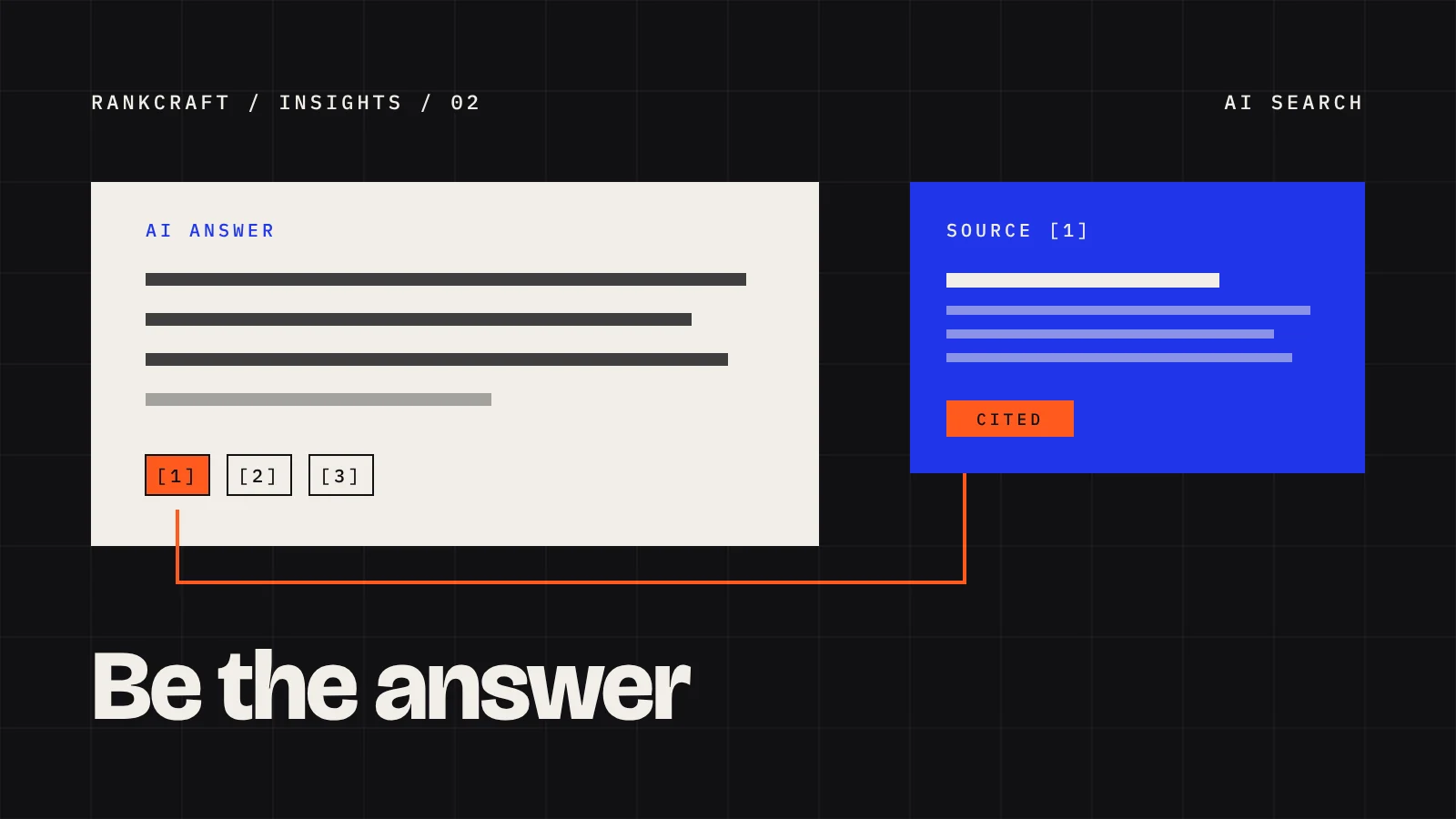
The details differ by platform, but the pattern is the same. When someone asks a question, the assistant:
- Searches. Google uses its own index for AI Overviews. ChatGPT search, Perplexity and Copilot query web search indexes and their own crawlers.
- Selects a handful of pages that look relevant and trustworthy for that specific question.
- Extracts passages that answer it clearly.
- Writes a summary and links to the sources it relied on.
That means two things. First, you can’t be cited if you aren’t found, so classic SEO still matters. Second, being found isn’t enough: your page needs passages that are easy to lift and clearly attributable to a credible business.
Step 1: make sure AI crawlers can read your site
Check your robots.txt. Many sites block AI crawlers by accident through security plugins or blanket rules. If you want to appear in AI answers, allow the main search and assistant crawlers, such as Googlebot, Bingbot, OAI-SearchBot and ChatGPT-User, PerplexityBot and ClaudeBot.
Also make sure your key content is in the HTML itself, not loaded only by JavaScript or hidden in tabs and PDFs. Fast, simple pages are easier to crawl and quote.
Some sites now publish an llms.txt file: a plain-text summary of who they are and links to their most important pages. It’s a small job and gives assistants a clean overview of your business.
Step 2: write answer-first
AI engines love content that answers a question directly, then supports the answer. For every important page:
- Use question-style headings that match how people ask: “How much does a website cost in Dubai?” rather than “Our pricing philosophy”.
- Answer in the first one or two sentences under the heading. Be specific. “Most small business websites in Dubai cost AED 8,000 to 25,000” is quotable. “Prices vary depending on your needs” isn’t.
- Add a short summary at the top of long pages: a few bullet points with the key facts.
- Use lists and tables for steps, comparisons and specifications.
- Include FAQs with concise answers, marked up with FAQ schema.
This is the same structure that wins featured snippets, which is why the two disciplines overlap so much.
Step 3: become an unambiguous entity
Assistants need to be confident about who you are before they recommend you. Help them by making your business identity consistent everywhere:
- Exactly the same business name, address, phone and website on your site, Google Business Profile, LinkedIn, directories and social profiles.
- An About page that states plainly what you do, where you’re based, who leads the company, how long you’ve operated and which certifications or partnerships you hold.
- Organization and LocalBusiness schema on your site, with
sameAslinks to your official profiles. - Service pages that name each service in the words customers use, with the locations you serve.
When an assistant sees the same facts about you from many independent sources, it can state them with confidence.
Step 4: earn mentions beyond your own website
AI answers lean heavily on what others say about you. For UAE businesses, the most useful sources include:
- Reviews on Google, industry platforms and marketplaces, with detail about the service.
- Regional media and trade publications. Expert commentary, original data and genuine news get picked up and cited.
- “Best of” lists and comparisons in your sector. Assistants often use these when asked for recommendations.
- Community discussions on Reddit, Quora and forums where people ask for recommendations in Dubai and Abu Dhabi.
- Partner and vendor pages that list you as a certified partner.
This is where digital PR and online reputation management directly feed AI visibility.
Step 5: publish in Arabic
Arabic is one of the most-used languages online, but high-quality Arabic web content is still scarce. That’s an opportunity. When someone asks an assistant a question in Arabic, there are far fewer strong sources to choose from.
Translate your most important pages properly, with a native writer, right-to-left layout and hreflang tags. Then answer the questions your Arabic-speaking customers ask, in their words.
Step 6: measure your AI visibility
There’s no Search Console for ChatGPT yet, so measure it directly:
- List 20 to 50 questions your buyers ask, such as “best SEO agency in Dubai” or “how to set up Microsoft 365 for a small company in the UAE”.
- Ask them each month in Google (noting AI Overviews), ChatGPT, Perplexity, Gemini and Copilot.
- Record whether you’re mentioned, whether you’re linked, and which competitors and sources appear.
- In GA4, track referral traffic from chatgpt.com, perplexity.ai, copilot.microsoft.com and gemini.google.com.
The sources that get cited instead of you show exactly what to improve: the format they use, the facts they include, and where they’re mentioned.
A quick AI search checklist
- AI crawlers allowed in
robots.txt - Key content in plain HTML, fast on mobile
- Answer-first headings and summaries on service pages
- FAQ, Organization, LocalBusiness and Service schema
- Consistent business details across the web
- A clear About page with real people and credentials
- Steady reviews and third-party mentions
- Proper Arabic versions of key pages
- Monthly AI visibility tracking
Get help with AI search
We run AI search optimization in Dubai alongside classic SEO, so your business shows up in both the blue links and the AI answer. If you’d like to see where you stand today, ask for a free audit and we’ll include an AI visibility check. For the SEO foundations, start with our guide to SEO in Dubai.

A Dubai-based team of SEO, paid media, AI and IT specialists working with businesses across the UAE, the GCC and international markets. About us · Talk to us